
Vertical Sleeve Gastrectomy (VSG)
The Vertical Sleeve Gastrectomy (VSG) is the newest surgical
procedure available to help severely over weight patients lose weight.
The Vertical Sleeve Gastrectomy (VSG) is the restrictive portion of the
Duodenal Switch Procedure. The duodenal switch procedure is
usually reserved for the super obese, i.e. patients who weigh in the 450 to 600
pound range. In these patients, this risky procedure was typically done in two
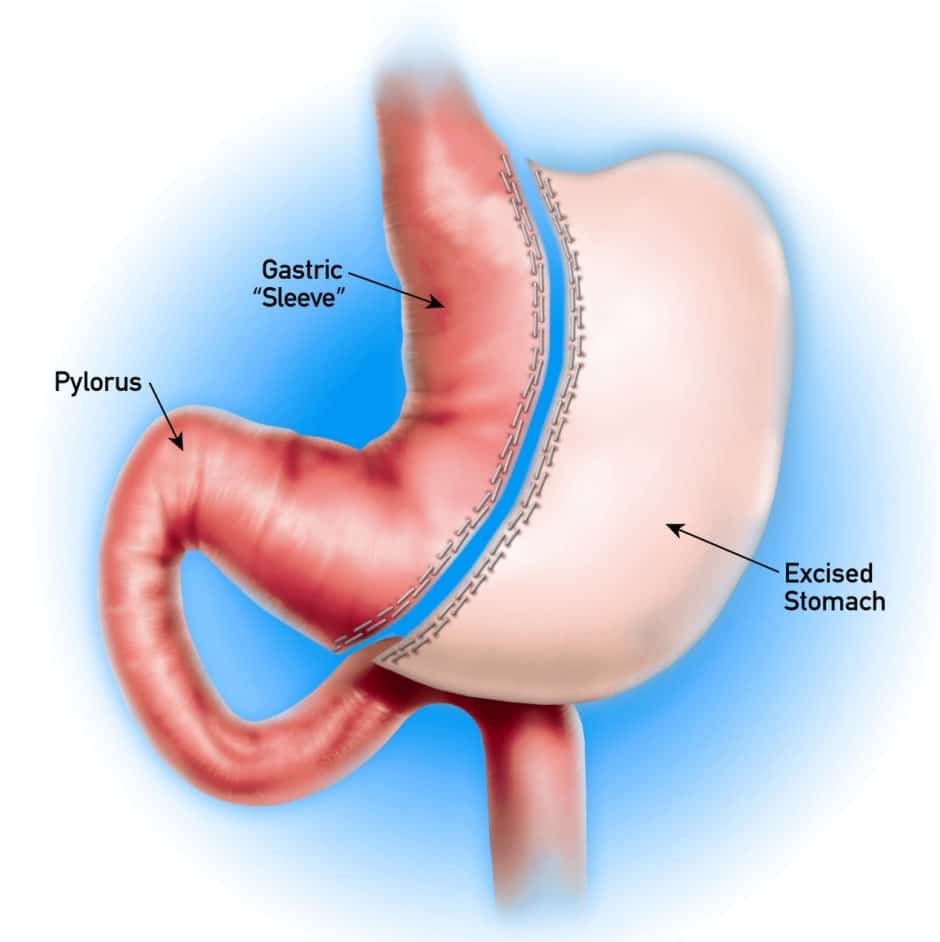
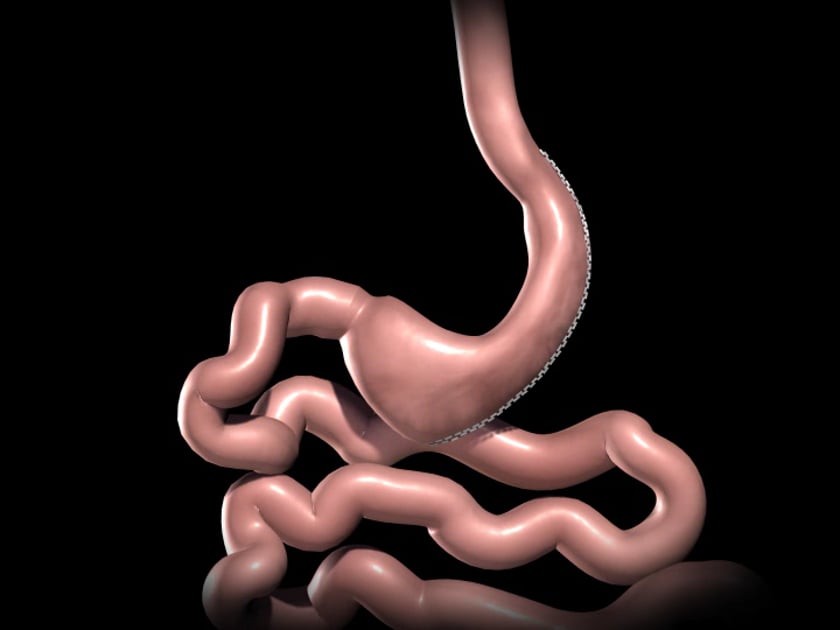
stages. The first stage involves removing a large portion of the stomach
changing the stomach into a narrow tube. The remaining stomach is similar in
size and shape to a banana. Patients who underwent this procedure lost much of
their excess body weight and many never required the second stage of the
procedure. Similar success has been seen in patients undergoing the procedure
with lower BMIs as well.
Bariatric Surgeons began performing the Vertical Sleeve Gastrectomy (VSG)
as a standalone procedure in the US in 2001. The last 3 years has seen a rapid
rise in the number of VSG procedures performed at bariatric
centers across the US. Recently a number of bariatric surgery centers have
published their experience with the (VSG) Vertical Sleeve Gastrectomy
surgery. Several centers have performed over 1000 (VSG)
procedures. Weight loss seen in (VSG) Vertical Sleeve Gastrectomy
patients both short and long term is very encouraging. Excess weight loss
approaching 80% at 2 years follow (VSG) is commonly seen.
This is similar weight loss seen in patients having Gastric Bypass
over the same time interval. Patients undergoing the Vertical Sleeve
Gastrectomy
often experience more weight loss and a faster rate of weight loss compared to
patients who underwent the Lap Band® procedure. Patients who had
the (VSG) also experience improvement or resolution in their co
morbidities similar to the Gastric Bypass and Lap Band®.
The Vertical Sleeve Gastrectomy (VSG) is a restrictive procedure.
No intestinal transection or re-routing is required. This makes the (VSG)
much safer than the gastric bypass. Approximately 70 % of the stomach is
removed. The remaining tubular stomach can only hold about 80 cc of fluid or
around 5 bites of solid food. Patients can only eat small amounts of food before
feeling full similar to the Lap Band® procedure. Patients report
almost no hunger between meals
and often have to remind themselves to eat!! This is probably due to removing
the portion of the stomach that produces hunger stimulating hormones like
Grehlin . Unlike the Lap Band® procedure no adjustments are
required so fewer follow-up visits are required.
Since a portion of the stomach is removed, the procedure is considered
nonreversible. Risks particular to the Vertical Sleeve Gastrectomy
include bleeding from the staple line 1.4%, staple line leak 2.4%, stricture
formation, pouch dilation 2.8%, and GERD (chronic heart burn) symptoms 4.7%.
Long term results (>5 years) are not yet available.
Who should consider the (VSG) Vertical Sleeve Gastrectomy
Procedure:
-
Patients considering the Gastric Bypass or Duodenal Switch surgeries but are concerned about the complications or side effects related to intestinal rerouting (anastomotic leaks, vitamin and mineral malnutrition).
- Patients considering the Lap Band® with higher BMIs (BMI > 50).
- Patients with chronic diseases requiring long term steroid use.
- Patients who have difficulty meeting the close follow-up requirements of the Lap Band®.